
Learn
Basement Flooding: What to Do First
Basement flooding: what to do first, in order. Electrical safety, finding the source, what not to touch, what to photograph, and the Michigan deadlines that matter.
First, stay out of the water if outlets, cords, or appliances are submerged, and shut off power to the basement only if you can reach the panel without stepping in water. Then find and stop the source: main water valve, sump, or drain. Photograph everything before cleanup, stop using drains if it's a backup, and start drying within 24 hours.
Published 2026-09-26 · Updated 2026-09-26
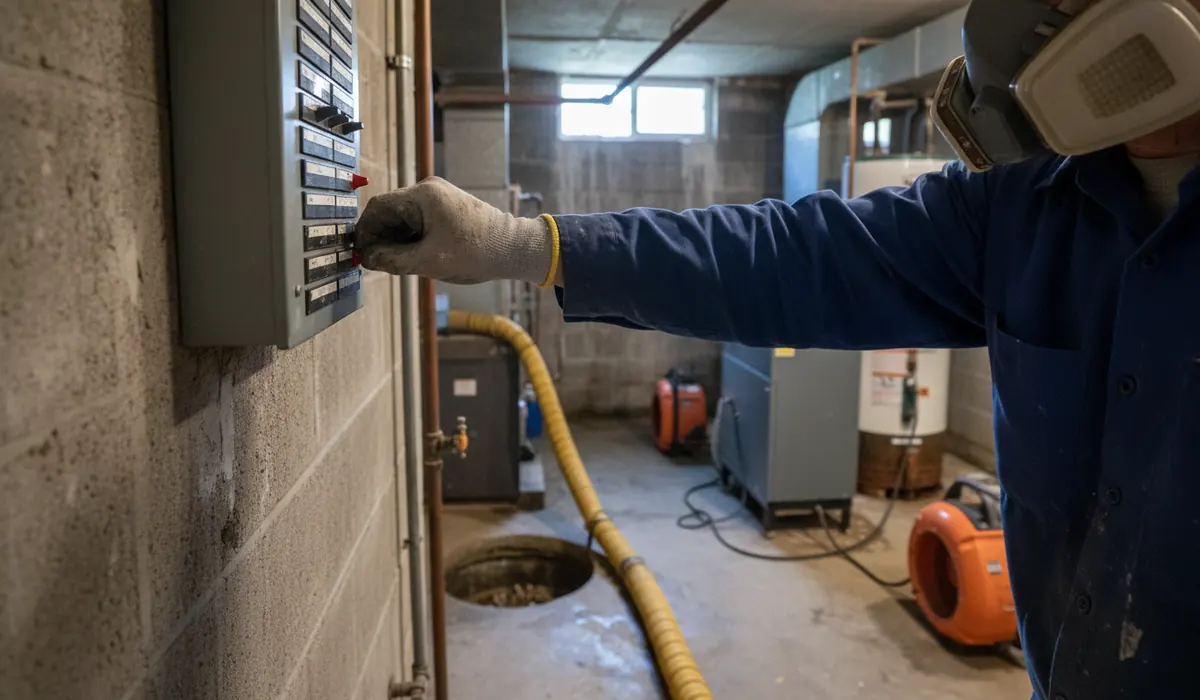
Water Damage Lansing is a water damage restoration company in Lansing, MI, where the basement is where most water damage starts. If your basement is flooding right now, here’s what to do first, in order.
1. Stay safe around electricity
Don’t step into the water if outlets, extension cords, a furnace, a water heater, a washer, or a freezer are in it. If you can reach your electrical panel without walking through water, shut off the breakers for the basement. If you can’t, stay out and call the utility or an electrician. Gas appliances that were submerged should be checked before relighting.
2. Find and stop the source
- Pipe or water heater: shut the main water valve, usually where the water line enters the basement.
- Sump pump: check for power (a tripped GFCI or outage), a stuck float, or a clogged discharge. If it’s out, a rented pump can buy time.
- Floor drain backing up: stop using all water in the house. Don’t flush, shower, or run the washer, because it all drains to the same place.
- Water through walls or window wells: usually saturated ground. Clear window-well drains and extend downspouts away from the house.
3. Photograph everything
Before moving anything, take photos and a video of the water depth, the source, and damaged items. Insurers and, for a sewer backup, the city will want them. See what to photograph.
4. Protect people and belongings
- If the water came from a drain, treat it as sewage: keep children and pets away and wear boots and gloves. See is sewage backup dangerous.
- Move valuables, papers, and electronics upstairs if you can do it safely.
- Lift furniture onto blocks or foil to stop wicking.
5. Call for help and start drying within 24 hours
Mold can begin growing on wet drywall and carpet pad within 24–48 hours. Lansing basements are cool and damp, and the clay soil around them stays wet, so they dry slowly on their own. Professional extraction and dehumidifiers should start the same day. See how long to dry out a basement.
6. Know your Michigan deadlines
- Insurance: report promptly. Floor-drain backups and sump overflow are only covered with a water backup endorsement. See does homeowners insurance cover basement flooding.
- Sewer backup from the public system: you have 45 days to give the city written notice. See the 45-day rule.
What not to do
- Don’t use a household vacuum on water.
- Don’t mop sewage with bleach and call it clean. Porous materials it soaked need to come out.
- Don’t close up wet walls or re-lay carpet until readings say it’s dry.
- Don’t wait for the adjuster before drying. Policies require you to limit further damage.
The bottom line
If you want this priced for your own property rather than in ranges, we come out and assess at no charge across Lansing and the Greater Lansing area — including East Lansing, Okemos, Holt, DeWitt, Grand Ledge, Delta Township, and Haslett. You get a written scope with the water category and affected areas broken out separately. Call (517) 816-1499.