
Decision Guide
Does Homeowners Insurance Cover Basement Flooding in Michigan?
Does homeowners insurance cover basement flooding in Michigan? It depends on the source: burst pipe, sewer backup, sump failure, seepage, or flood. A cause-by-cause breakdown.
It depends on how the water got in. A burst pipe or failed water heater is usually covered. Sewer or drain backups and sump pump overflow are excluded unless you bought a water backup endorsement. Groundwater seepage is usually excluded. Rising floodwater needs separate NFIP or private flood insurance.
Published 2026-09-26 · Updated 2026-09-26
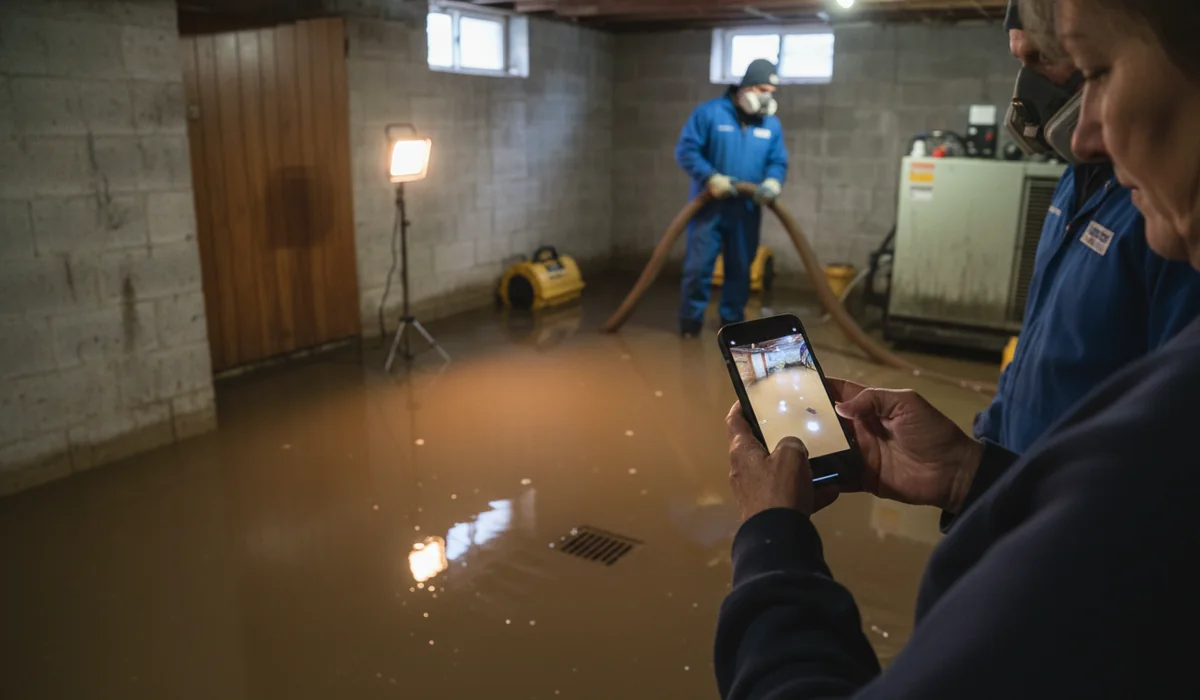
Water Damage Lansing is a water damage restoration company serving Lansing, MI, where most water damage happens in basements. So the question we hear most is whether homeowners insurance covers basement flooding in Michigan. The answer depends almost entirely on how the water got in.
Coverage by cause
| How the water got in | Standard Michigan homeowners policy | What covers it |
|---|---|---|
| Burst or frozen pipe | Usually covered | Your homeowners policy |
| Water heater, washer, or appliance failure | Usually covered (not the appliance) | Your homeowners policy |
| Sewer or floor-drain backup | Excluded | Water backup endorsement |
| Sump pump overflow or failure | Excluded | Water backup / sump overflow endorsement |
| Seepage through walls or floor | Usually excluded | Rarely covered |
| Rising floodwater from outside | Excluded | NFIP or private flood insurance |
Michigan’s DIFS notes that “flood” can have a specialized meaning in a policy, and that storm rainwater, sewer backup, and sump failure may be treated differently. Read your own policy’s water exclusions.
Burst pipes and appliances
Sudden, accidental discharge from plumbing or an appliance is the classic covered loss. The exceptions: freeze damage in a vacant or unheated home, and slow leaks that went on for weeks, which are treated as gradual damage. The appliance itself is usually not covered. See frozen pipe burst: what to do.
Sewer backups and sump pumps
These are the most common Lansing basement losses, and the most commonly excluded. Coverage comes from a water backup endorsement, commonly $75–$150 a year for $5,000–$25,000 of coverage. See sewer backup insurance in Michigan and is sump pump failure covered.
If the public sewer caused a backup, you may also have a claim against the city, but only with written notice within 45 days. See the 45-day rule.
Seepage
Water that works through foundation walls or the floor slab from saturated soil is usually excluded as surface water, groundwater, or gradual damage. Greater Lansing’s clay loam makes it common after snowmelt. See why Lansing basements leak. The fix is usually drainage and waterproofing, not insurance.
Floodwater
Rising water from the Grand River, the Red Cedar, a creek, or water flowing across the ground into window wells is flood. Homeowners policies exclude it. NFIP flood insurance covers it, usually after a 30-day waiting period, and covers basements only partly. See flood insurance in Lansing.
What to do right now
- Stop the source if you can, and keep people away from electrical hazards.
- Photograph everything before cleanup: the source, the water line, damaged items.
- Call your insurer and ask which coverage applies and whether you have a water backup endorsement.
- Start drying quickly. Policies require you to limit further damage, and mold can start in 24–48 hours.
- Keep receipts and damaged items until the adjuster says otherwise.
The bottom line
If you want this priced for your own property rather than in ranges, we come out and assess at no charge across Lansing and the Greater Lansing area — including East Lansing, Okemos, Holt, DeWitt, Grand Ledge, Delta Township, and Haslett. You get a written scope with the water category and affected areas broken out separately. Call (517) 816-1499.