
Last updated: 2026-09-26
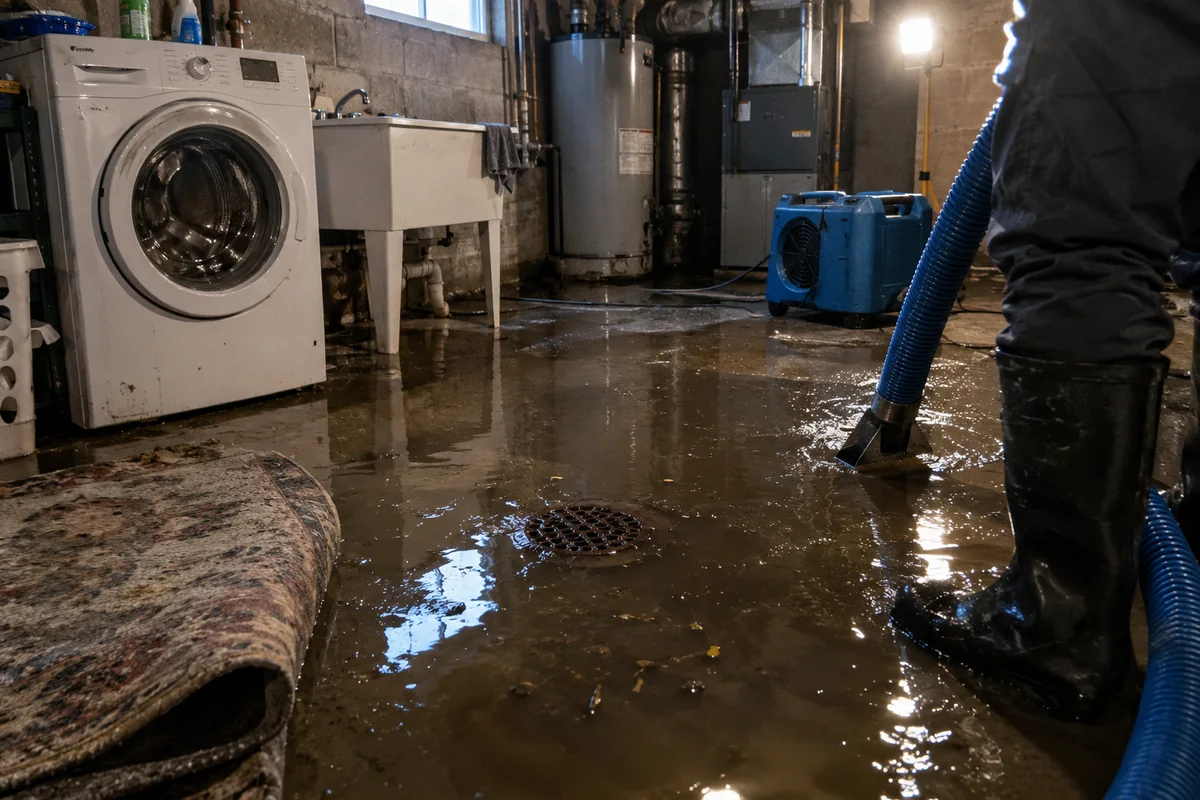
Water Damage Lansing is a water damage restoration company that provides sewage backup cleanup in Lansing, MI and the Greater Lansing area. A sewer backup is the most common reason a Lansing basement ends up with contaminated water in it: in a heavy storm, older parts of the city's sewer system overload and push water back up through the lowest drain in the house. Under the IICRC S500 standard that's Category 3 (black) water, and it's cleaned up differently from a burst pipe.
What we do on the first visit
We confirm it's a backup — water came up through a floor drain, shower, or toilet — and whether it's still rising. We tell you what to stop using (toilets, washer, sinks) until the line clears. Then we photograph everything before cleanup starts, because both your insurer and any claim against the city need the evidence.
Because this is Category 3 water, the scope includes removing contaminated porous materials, not drying them. You get that scope in writing before work starts.
Why Lansing sewers back up into basements
Parts of Lansing still run on a combined sewer — one pipe carrying both sewage and storm water. The city is spending about $250 million between 2020 and 2035 to separate it, under a consent order with Michigan's environmental agency. Until your area is separated, a heavy storm can fill the line faster than it drains, and the overflow goes to the lowest opening: your basement floor drain.
Backups also happen on separated systems — a blocked private lateral, tree roots, or a collapsed pipe. That distinction matters: the city is only potentially responsible when the public sewer caused it.
What gets removed and what gets cleaned
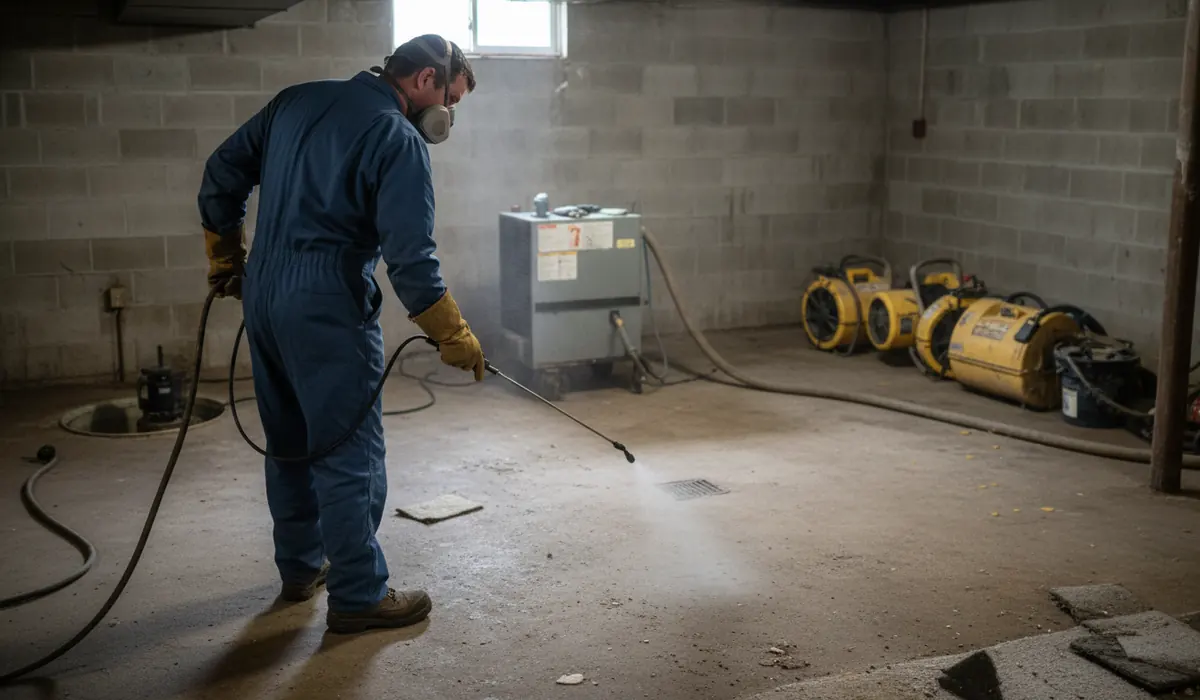
IICRC S500 treats porous materials contaminated by Category 3 water as unsalvageable. That means carpet and pad, drywall and insulation the water touched (plus a margin above the wet line), and porous stored items like cardboard, upholstered furniture, and mattresses. Concrete, block, tile, and sound framing are cleaned, disinfected, and dried. Crews work in protective gear and the area is kept separate from the rest of the house.
Please don't mop it and bleach it yourself. Bleach doesn't reach contamination inside porous materials, and sewage carries bacteria and viruses you don't want on your hands or tracked upstairs.
Insurance, the 45-day claim, and the city program
A standard Michigan homeowners policy excludes sewer and drain backup unless you bought a water backup endorsement, usually $75–$150 a year for $5,000–$25,000 of coverage. See sewer backup insurance in Michigan.
If the public sewer caused it, Michigan law (MCL 691.1416–.1419) allows a claim against the city or utility — filed in writing within 45 days of discovering the damage. The City of Lansing also reimburses property owners inside city limits for a backflow valve installed by a licensed plumber, up to $4,750. See the 45-day claim and the Basement Backup Protection Program.
What's included
- Photo documentation before cleanup begins
- Category 3 handling under IICRC S500 with protective gear
- Extraction of sewage and standing water
- Removal of contaminated carpet, pad, drywall, and insulation
- Cleaning and disinfection of concrete, block, and framing
- Contents sorted and photographed with you before disposal
- Structural drying with daily readings
- Records to support an insurance or 45-day city claim
What this costs in Lansing
Sewage Backup Cleanup runs $3,500–$6,000 minimum for a Category 3 job in this area. That is the published Lansing minimum for sewage (Category 3) work; larger areas run $7.50–$11.25 per square foot, and M&M Restoration cites $2,000–$10,000+ across Mid-Michigan. The things that move a job up its range are the water category, how much square footage is affected, and how long the water sat before extraction started. If you want a number before you call, the water damage cost calculator will get you close.
When it needs doing
- Dark, foul-smelling water coming up through the basement floor drain
- Toilets or tubs gurgling or backing up during heavy rain
- Water around the floor drain after a storm with no other source
- A sewage smell in the basement after the water drains away
- Several neighbors reporting backups after the same storm
Related resources
These go deeper on the questions that come up most on this job:
- How Much Does Sewage Backup Cleanup Cost?
- Why Is Water Coming Up Through My Basement Floor Drain?
- Is Sewage Backup Dangerous?
- Can You File a Sewer Backup Claim Against the City in Michigan?
- How the Lansing Basement Backup Protection Program Works
- Sewer Backup Insurance Coverage in Michigan: Are You Covered?