
Skip to content
Water Damage Lansing

Lansing, MI · 24/7 emergency response

Mold Remediation in Lansing, MI

Mold remediation in Lansing, MI after water damage: containment, removal of moldy porous materials, HEPA cleanup, and fixing the moisture that caused it. Lansing mold jobs typically run $1,898–$2,250.

Typical range: $1,898–$2,250 for a typical job

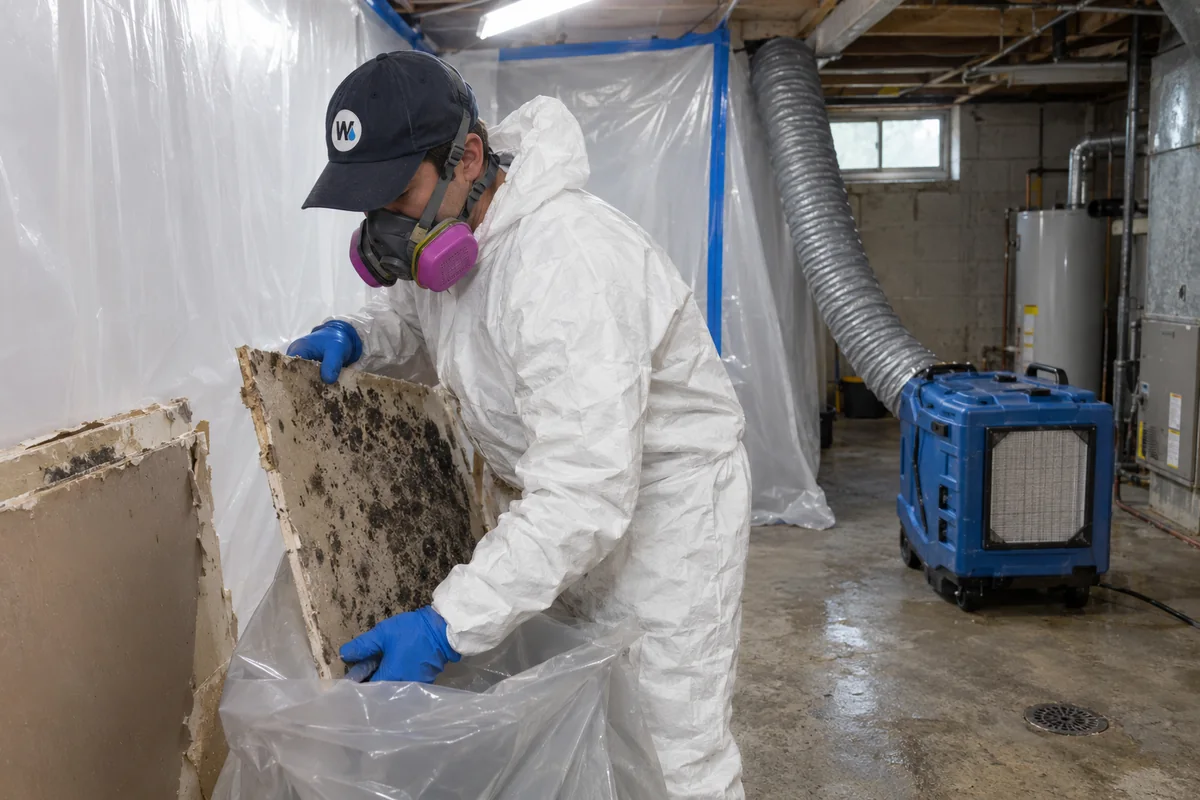
Mold Remediation underway on a property in Lansing, MI

Dried to the IICRC S500 standard

Moisture readings logged until dry

Written scope before work starts

24/7 emergency response

Photo & moisture logs for your insurer

Last updated: 2026-09-26

Water Damage Lansing is a water damage restoration company that provides mold remediation in Lansing, MI and the Greater Lansing area. Nearly every mold problem we see in Lansing traces back to water: a basement that flooded and wasn't fully dried, a slow leak behind a wall, an ice dam that soaked an attic, or chronic seepage through a block foundation. Remediation that doesn't fix the moisture just schedules the next remediation.

What we do on the first visit

We look for the moisture source first, then the extent of the growth. Moisture readings and a visual inspection show how far the mold goes — behind drywall, under carpet, on the backs of paneling and stored boxes — and whether the water behind it is still active.

You get a written scope that separates the mold work from any water damage repair. Michigan has no state mold-remediation license, so it's worth knowing exactly what any contractor will contain, remove, and clean.

How mold remediation is done properly

The industry reference is the IICRC S520 standard for mold remediation. The core idea is simple: contain it, remove it, clean what's left, and dry the structure. Work areas are sealed off with plastic sheeting and kept under negative air pressure with HEPA air scrubbers so spores don't spread to the rest of the house. Porous materials with growth — drywall, carpet pad, ceiling tile, insulation — are bagged and removed. Framing and concrete are cleaned with HEPA vacuuming and wiping.

Spraying bleach on mold and painting over it is not remediation. It leaves the growth in the material and the moisture behind it.

Where mold grows in Lansing homes

Most of what we find is in basements: the bottom of finished drywall, the back of paneling on block walls, carpet pad over concrete, and cardboard boxes against a damp wall. The next most common spots are attics and upper walls after ice dams, and bathrooms and kitchens behind slow plumbing leaks. The pattern tells us where to look for the water.

Does insurance cover mold?

Coverage follows the cause. Mold resulting from a sudden, covered water event — like a burst pipe — is often covered, sometimes up to a sublimit. Mold from long-term leaks, humidity, or seepage is usually excluded. A water backup endorsement typically covers mold caused by a backup. Check your policy's mold language before remediation starts; we document the source to support the claim.

What's included

  • Moisture source identified and documented
  • Extent of growth mapped, including behind finishes
  • Containment with plastic sheeting and negative air
  • HEPA air scrubbers running during the work
  • Removal and bagging of moldy porous materials
  • HEPA vacuuming and cleaning of framing and concrete
  • Structural drying after removal
  • Written scope separating mold work from repairs
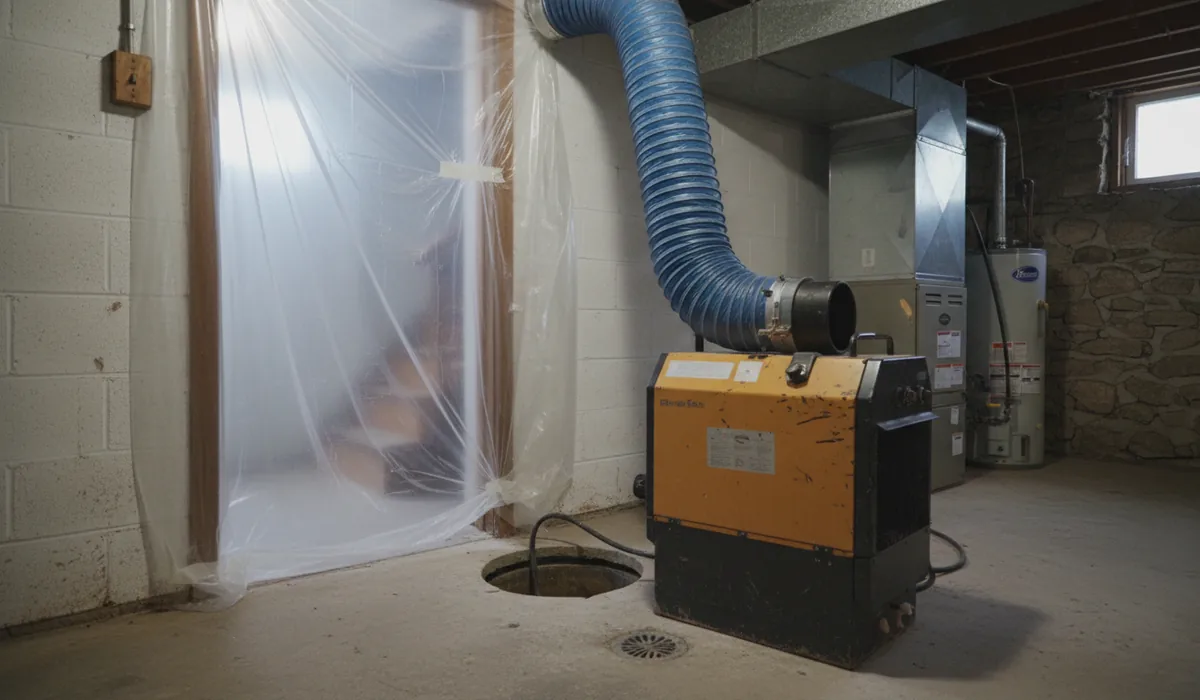
Mold Remediation in progress on a property in Lansing, MI

What this costs in Lansing

Mold Remediation runs $1,898–$2,250 for a typical job in this area. That is Homeyou's Lansing mold removal range; M&M Restoration cites $500–$8,000+ across Mid-Michigan for small to large jobs. The things that move a job up its range are the water category, how much square footage is affected, and how long the water sat before extraction started. If you want a number before you call, the water damage cost calculator will get you close.

When it needs doing

  • A musty smell in the basement or a closed room
  • Dark spotting at the bottom of drywall or on paneling
  • Growth on stored boxes, furniture, or carpet backing
  • Staining on attic sheathing after an ice dam
  • Recurring allergy-like symptoms in one area of the house

Related resources

These go deeper on the questions that come up most on this job:

Straight comparison

DIY shop-vac, the cheapest bid, or the job done properly

 DIY shop-vacCheapest bidDone properly
Water extractionShop-vac and fans — surface water only; moisture stays in the carpet pad, drywall, and bottom platesBasic extraction, no moisture mappingTruck-mount extraction plus moisture mapping to find water that wicked up drywall and under flooring
Drying equipmentA box fan or two, days longer than neededMinimum air movers, pulled earlyCommercial air movers and dehumidifiers, sized to the room and monitored to a dry standard
Water category handlingTreated the same regardless of sourceRarely distinguishedClean, gray, and black water handled to IICRC S500's different safety and disposal requirements
Mold riskNot checkedSkipped unless askedMoisture readings logged until the structure reads dry, since mold can begin in 24-48 hours
DocumentationNoneRarely providedTime-stamped photos and moisture logs, useful for an insurance claim
Sewer backupsBleach and a mop on Category 3 water — the contamination stays in porous materialsOften treated like clean waterPorous materials removed, surfaces cleaned and treated, and the backup documented for a 45-day city claim
If it's not actually dryMold shows up later, now a bigger jobChasing a phone number that stopped workingWe come back and re-check until the readings confirm it's dry

How it works

How mold remediation runs

  1. Find the water

    Moisture readings and inspection locate the source and the extent of growth.

  2. Contain

    Work area sealed and put under negative air with HEPA filtration.

  3. Remove and clean

    Moldy porous materials removed; framing and concrete HEPA-vacuumed and cleaned.

  4. Dry and verify

    The structure is dried and checked before rebuilding.

Get a free mold remediation assessment

A real person answers, day or night. We assess the damage, explain the water category, and give you a written scope — at no charge and with no pressure.

Questions

Mold Remediation questions

How much does mold remediation cost in Lansing?

Homeyou's Lansing data puts a typical mold job at $1,898–$2,250. M&M Restoration cites $500–$8,000+ across Mid-Michigan. Small contained areas sit at the bottom; whole finished basements or attics sit at the top.

Does Michigan require a mold remediation license?

No. Michigan has no separate state license for mold remediation. Repair work of $600 or more on a home does require a LARA Residential Builder or Maintenance & Alteration license, so ask who performs the rebuild.

How fast does mold grow after water damage?

Mold can begin growing on wet drywall, carpet pad, and wood within 24–48 hours. Cool, damp Lansing basements give it good conditions, which is why drying fast matters.

Can I remove mold myself?

The EPA's guidance treats roughly 10 square feet as the size a homeowner may handle with care. Beyond that, or if it's in HVAC, behind walls, or came from sewage, containment and professional removal are the safer route.

Do you charge for an on-site assessment?

No. On-site assessments are free across Lansing and the Greater Lansing area — including East Lansing, Okemos, Holt, DeWitt, Grand Ledge, Delta Township, and Haslett. We assess the damage, explain the water category, and hand you a written scope with affected areas and any mold remediation broken out as their own lines.

Call (517) 816-1499 — 24/7 live answer