
Learn
What to Photograph for a Water Damage Insurance Claim
What to photograph for a water damage insurance claim: a room-by-room checklist, the source, the water line, damaged items, and records a Michigan adjuster or city will ask for.
Before anything is moved or thrown out, photograph the source of the water, the water level on walls, every affected room from each corner, damaged items with model and serial numbers, and any failed part. Add video, note dates and times, and keep receipts and removed items until the adjuster says otherwise.
Published 2026-09-26 · Updated 2026-09-26
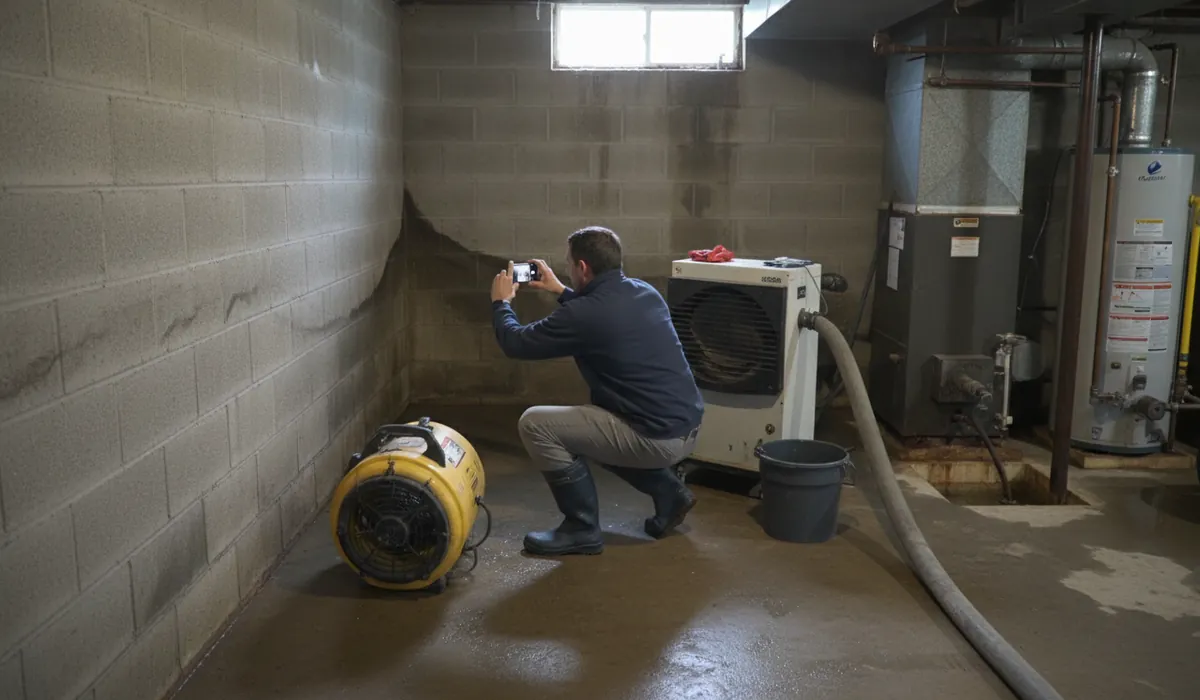
Water Damage Lansing is a water damage restoration company serving Lansing, MI, and good photos are the difference between a smooth water damage claim and a long argument. Here’s exactly what to photograph for a water damage insurance claim, in the order to do it.
Before you touch anything
If it’s safe, meaning the power is off in the wet area and the water isn’t sewage you’d have to wade through, take a first round of photos before anything is moved. Then stop the water and protect yourself. Documentation never comes before safety.
The checklist
1. The source
- The burst pipe, failed hose, water heater, sump pit, or floor drain
- A close-up of the failed part, then a wider shot showing where it is
- For a sump failure: the pump, float, pit, and water level
- For a floor-drain backup: the drain and any debris around it
2. The water level
- Standing water depth: a tape measure in the water is ideal
- The high-water line on walls, furniture, and boxes
3. Every affected room
- A wide shot from each corner
- Floors, baseboards, the bottoms of walls, and ceilings below upper-floor leaks
- A continuous video walk-through with you narrating the date and what happened
4. Damaged belongings
- Each item, with brand, model, and serial number visible where possible
- Electronics, appliances, furniture, rugs, and stored boxes, with contents visible if you can
5. Outside, for storm or flood losses
- Water in the yard, window wells, and street
- Neighbors’ properties if the event was widespread, which helps show a public sewer backup
Records to keep with the photos
- Dates and times: when it happened and when you found it
- Weather: a heavy-rain night supports a storm or sewer claim
- Receipts: plumber, cleanup, hotel, replacement items
- Plumber’s report: what failed and why
- Moisture logs from your restoration company. Insurers pay for drying by the day and want proof it was needed.
Special cases in Michigan
- Sewer backup from the public system: you may file a written claim with the city within 45 days of discovery. See the 45-day rule.
- Frozen pipes: keep evidence the heat was on. Freeze damage in unheated or vacant homes is often excluded.
- Slow leaks: insurers distinguish sudden from gradual damage. Photograph staining and rot patterns honestly. The adjuster will see them anyway.
What we document for you
On every job we take time-stamped photos of each room before, during, and after work, log moisture readings daily, and record what was removed and why. You get a copy to send to your insurer, and to the city if it’s a sewer claim.
The bottom line
If you want this priced for your own property rather than in ranges, we come out and assess at no charge across Lansing and the Greater Lansing area — including East Lansing, Okemos, Holt, DeWitt, Grand Ledge, Delta Township, and Haslett. You get a written scope with the water category and affected areas broken out separately. Call (517) 816-1499.