
Learn
Why Do Basements Leak in Lansing? Clay Soil and Hydrostatic Pressure
Why basements leak in Lansing: clay loam soil, hydrostatic pressure, high water tables, and older fieldstone and block foundations, plus how to tell seepage from a sewer backup.
Greater Lansing sits on heavy clay loam that holds water. After rain or snowmelt, saturated soil presses on foundation walls and floors (hydrostatic pressure) and pushes water through cracks, mortar joints, and the joint where wall meets floor. Older foundations and clay-tile footing drains in pre-1960 homes make it worse.
Published 2026-09-26 · Updated 2026-09-26
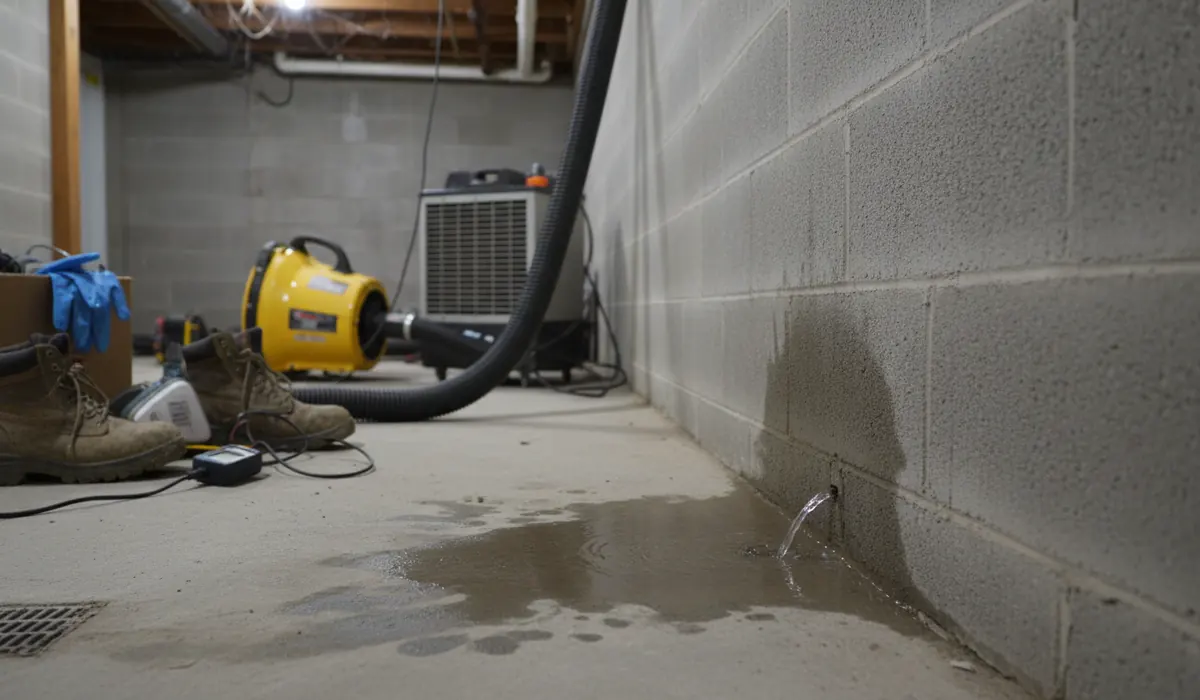
Water Damage Lansing is a water damage restoration company in Lansing, MI, and most of our jobs are basements. So here’s the plain explanation of why basements leak in Lansing, and why the clay soil is the root of it.
The soil: heavy clay loam
The Lansing area sits on glacial clay loam. Local soil surveys name types like Capac loam. Clay holds water like a sponge and drains slowly. After a soaking rain or fast snowmelt, the soil around your foundation fills up and stays wet for days. The area gets about 51 inches of snow a year, so spring melt is a reliable annual test.
Hydrostatic pressure
Water-saturated soil pushes on everything below grade. That’s hydrostatic pressure. It pushes sideways on foundation walls and upward on the basement floor. Water then finds the weakest points:
- The cove joint, where the wall meets the floor slab
- Cracks in poured walls or the floor
- Mortar joints in block and fieldstone walls
- Tie-rod holes and pipe penetrations
- Window wells that fill and overflow
Wet clay also expands, so repeated wet-dry and freeze-thaw cycles put stress on walls over time.
Old foundations
Lansing’s housing stock is old. The median home was built in 1959, and roughly a quarter of homes predate 1940. Older foundations were built of fieldstone, brick, or hollow block, often with little exterior waterproofing, and many rely on clay-tile footing drains that have silted up or collapsed after decades. Those homes leak more than modern poured foundations with drainage board and plastic drain tile.
High water tables
Near rivers and lakes, like the Grand, the Red Cedar, and Lake Lansing, the water table sits closer to the surface. Homes there depend on sump pumps to keep groundwater below the floor, and seepage gets worse when the pump can’t keep up.
Seepage vs. backup: how to tell
| Clue | Seepage | Sewer backup |
|---|---|---|
| Where water appears | Walls, cove joint, cracks | Floor drain, shower, toilet |
| Timing | Hours to days after rain or melt | During heavy rain |
| Smell and color | Earthy, clear to muddy | Sewage odor, discolored |
| Category | Usually clean to gray | Category 3 |
| Insurance | Usually excluded | Covered only with a backup endorsement |
This matters. A backup is a sewage cleanup with different safety, cost, and claim steps. See water coming up through the floor drain.
Reducing seepage
- Grading and downspouts: slope soil away from the house and extend downspouts well out.
- Window-well covers and drains
- A working sump pump with backup
- Crack repair for isolated leaks
- Interior or exterior drain tile for chronic leaks. Basement waterproofing in Michigan is a licensed trade under LARA.
After the water gets in
Seepage water still soaks carpet, drywall, and stored items, and mold can start within 24–48 hours. See flooded basement cleanup.
The bottom line
If you want this priced for your own property rather than in ranges, we come out and assess at no charge across Lansing and the Greater Lansing area — including East Lansing, Okemos, Holt, DeWitt, Grand Ledge, Delta Township, and Haslett. You get a written scope with the water category and affected areas broken out separately. Call (517) 816-1499.