
Decision Guide
Do You Need Flood Insurance in Lansing? The New FEMA Flood Map Explained
Flood insurance in Lansing: what the September 2026 preliminary FEMA flood maps for Ingham County mean, how to check your property, the appeal window, and how NFIP covers basements.
If your property is near the Grand River, Red Cedar, Sycamore Creek, or another mapped waterway, check FEMA's preliminary Ingham County flood maps released in September 2026. A 90-day appeal and comment period opened around September 24. Homeowners policies exclude flood, and NFIP coverage usually starts 30 days after purchase.
Published 2026-09-26 · Updated 2026-09-26
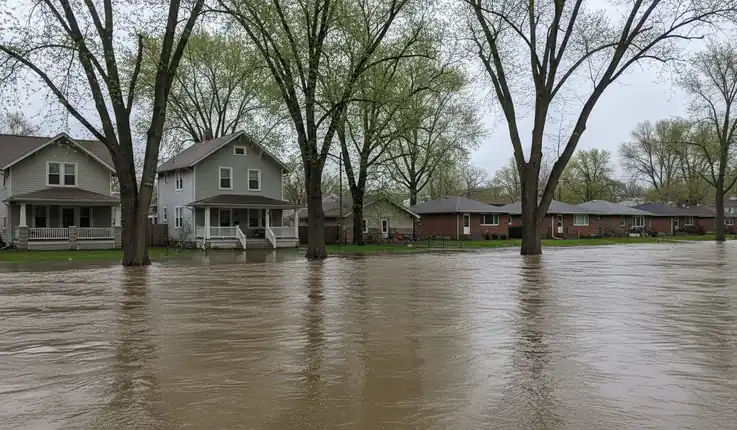
Water Damage Lansing is a water damage restoration company serving Lansing, MI and the Greater Lansing area. Flood insurance in Lansing became a more pressing question in September 2026, when FEMA released preliminary updated flood maps for Ingham County. Here’s what’s changing, how to check your property, and what flood insurance does and doesn’t cover.
What FEMA released in September 2026
On September 23, 2026, FEMA invited Ingham County residents to review preliminary Flood Insurance Rate Maps (FIRMs). A 90-day appeal and comment period began on or around September 24, 2026. The maps show which properties FEMA considers at high risk of flooding, and they drive both flood insurance pricing and whether lenders require flood coverage.
How to check your address:
- FEMA’s Flood Map Changes Viewer: msc.fema.gov/fmcv
- FEMA map specialists: 1-877-336-2627 (1-877-FEMA-MAP)
- Ingham County’s local contact: the Deputy Emergency Manager
Appeals must include technical information, such as hydraulic or hydrologic data, and can’t be based on projects proposed or underway after the study began.
Why Lansing floods
Lansing sits where the Red Cedar River meets the Grand River, with Sycamore Creek to the south. The USGS has published flood-inundation maps for all three near Lansing. The record event was April 1975: an intense storm on snowmelt-swollen rivers damaged about 4,500 homes, 175 of them to at least half their value, according to USGS reports. More recently, early April 2026 brought nearly 4 inches of rain. The Grand River was forecast to crest at 11.2 feet, and the Red Cedar ran more than nine times normal flow. The governor’s Executive Order 2026-8 declared a state of emergency during a second round of storms that month.
What homeowners insurance does and doesn’t cover
Standard homeowners policies exclude flood: rising water, overflowing rivers, and surface water flowing onto the property. Sewer backups and sump overflow are a separate exclusion, covered by a water backup endorsement. Burst pipes are covered normally. See does homeowners insurance cover basement flooding in Michigan.
How NFIP flood insurance works
- Waiting period: coverage usually starts 30 days after purchase. Buying when the river is rising is too late.
- Limits: NFIP residential policies cover up to $250,000 for the building and $100,000 for contents.
- Basements: coverage is limited to certain items, such as furnaces, water heaters, washers and dryers, and freezers, plus cleanup. Finished walls, floor coverings, and most stored belongings in a basement generally aren’t covered.
- Lender requirements: if your home is in a high-risk zone and has a federally backed mortgage, your lender will require flood insurance.
- Private flood insurance is also available and may offer different basement coverage.
If your zone is changing
If the preliminary map moves you into a high-risk zone, you have time before the maps take effect. Talk to your insurance agent now about coverage and pricing options, and consider whether an appeal is worth pursuing with technical support. If the map moves you out of a high-risk zone, you may still want coverage. Floods don’t follow map lines.
After a flood
Floodwater is Category 3 under the IICRC S500 standard. Drywall and insulation it touched are removed, and everything that stays is cleaned and disinfected. Photograph the high-water line and every damaged room before cleanup. See storm and flood damage restoration.
The bottom line
If you want this priced for your own property rather than in ranges, we come out and assess at no charge across Lansing and the Greater Lansing area — including East Lansing, Okemos, Holt, DeWitt, Grand Ledge, Delta Township, and Haslett. You get a written scope with the water category and affected areas broken out separately. Call (517) 816-1499.