
Learn
What Are the Water Damage Categories (Clean, Gray, and Black Water)?
Water damage categories explained: IICRC S500 Category 1 clean, Category 2 gray, and Category 3 black water, with Lansing examples and how the category changes cleanup and cost.
The IICRC S500 standard sorts water damage into three categories. Category 1 is clean water from a sanitary source like a supply line. Category 2 (gray water) is significantly contaminated, like washer or dishwasher discharge. Category 3 (black water) is grossly contaminated: sewage, floor-drain backups, and floodwater. Higher categories mean more removal and higher cost.
Published 2026-09-26 · Updated 2026-09-26
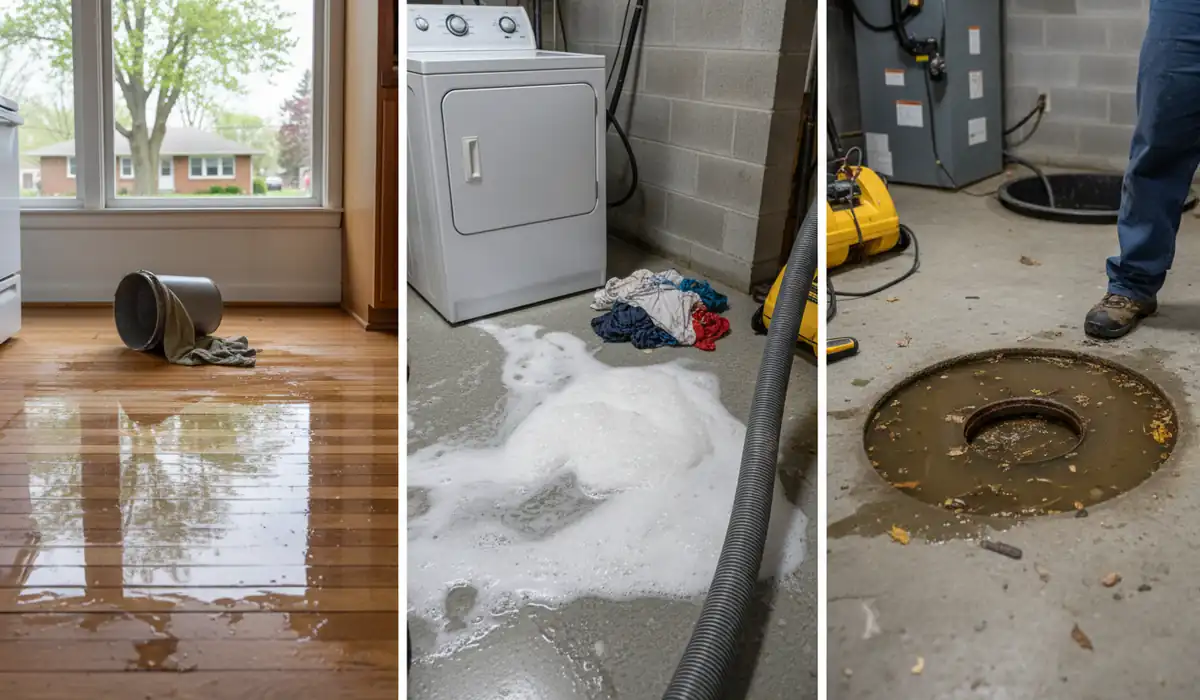
Water Damage Lansing is a water damage restoration company in Lansing, MI, and the first thing we determine on every job is which of the water damage categories we’re dealing with. It decides what can be saved, how the crew protects itself, and what it costs.
The three categories (IICRC S500)
| Category | What it is | Lansing examples |
|---|---|---|
| 1 — Clean | Water from a sanitary source that poses no substantial risk | Burst supply pipe, water heater tank, ice-maker line, bathtub overflow caught quickly |
| 2 — Gray | Significantly contaminated; could cause illness if contacted or swallowed | Washing machine or dishwasher discharge, toilet overflow with urine only, often sump overflow |
| 3 — Black | Grossly contaminated; can contain disease-causing organisms | Sewage, floor-drain backups, river and surface floodwater, toilet overflow with feces |
Why it changes the cleanup
Category 1: most materials can be dried in place if work starts quickly. Carpet can often be saved, with the pad usually replaced. Drywall that’s wet but firm can be dried.
Category 2: more removal. Carpet pad is replaced, and carpet is often too. Affected surfaces are cleaned with antimicrobial treatment.
Category 3: porous materials the water touched, including carpet, pad, drywall, insulation, and upholstered items, are removed, not dried. The crew wears protective equipment, and hard surfaces are cleaned and disinfected.
Why it changes the price
Published Lansing rates show the difference:
| Category | Per sq ft | Typical minimum |
|---|---|---|
| 1 — Clean | $3.85–$5.10 | $1,200–$2,500 |
| 3 — Black | $7.50–$11.25 | $3,500–$6,000 |
No Lansing company publishes a gray-water per-foot rate. See water damage restoration cost in Lansing.
Categories get worse over time
Clean water doesn’t stay clean. After it sits, and as it runs through carpet, under flooring, and into wall cavities, it picks up contaminants and supports microbial growth. Water that started as Category 1 can be treated as Category 2 or 3 after a day or two. Fast extraction keeps a job in the cheaper, more salvageable category.
Why Lansing sees so much Category 3
Older parts of Lansing still have a combined sewer, so storm backups through floor drains carry sewage. The Grand and Red Cedar rivers and local creeks bring floodwater, which is Category 3 too. In this market, a stormy-night basement call is more often Category 3 than Category 1.
Categories vs. classes
The S500 standard also uses classes to describe how much water is present and how hard it is to dry: Class 1 is a small area with little absorption, and Class 4 involves dense materials like hardwood, plaster, and concrete. The class drives drying equipment and time. The category drives safety and what gets removed.
The bottom line
If you want this priced for your own property rather than in ranges, we come out and assess at no charge across Lansing and the Greater Lansing area — including East Lansing, Okemos, Holt, DeWitt, Grand Ledge, Delta Township, and Haslett. You get a written scope with the water category and affected areas broken out separately. Call (517) 816-1499.