
Decision Guide
Who Pays for Water Damage in a Michigan Rental: the Landlord or the Tenant?
Who pays for water damage, landlord or tenant, in Michigan: whose insurance covers the building vs belongings, when a tenant is liable, and what to do in a Lansing or East Lansing rental.
Generally, the landlord's insurance covers the building and the tenant's renters insurance covers the tenant's own belongings. If a tenant caused the damage through negligence, their renters liability coverage may pay for building damage. Sewer backup and flood are excluded from both policies unless endorsements were added.
Published 2026-09-26 · Updated 2026-09-26
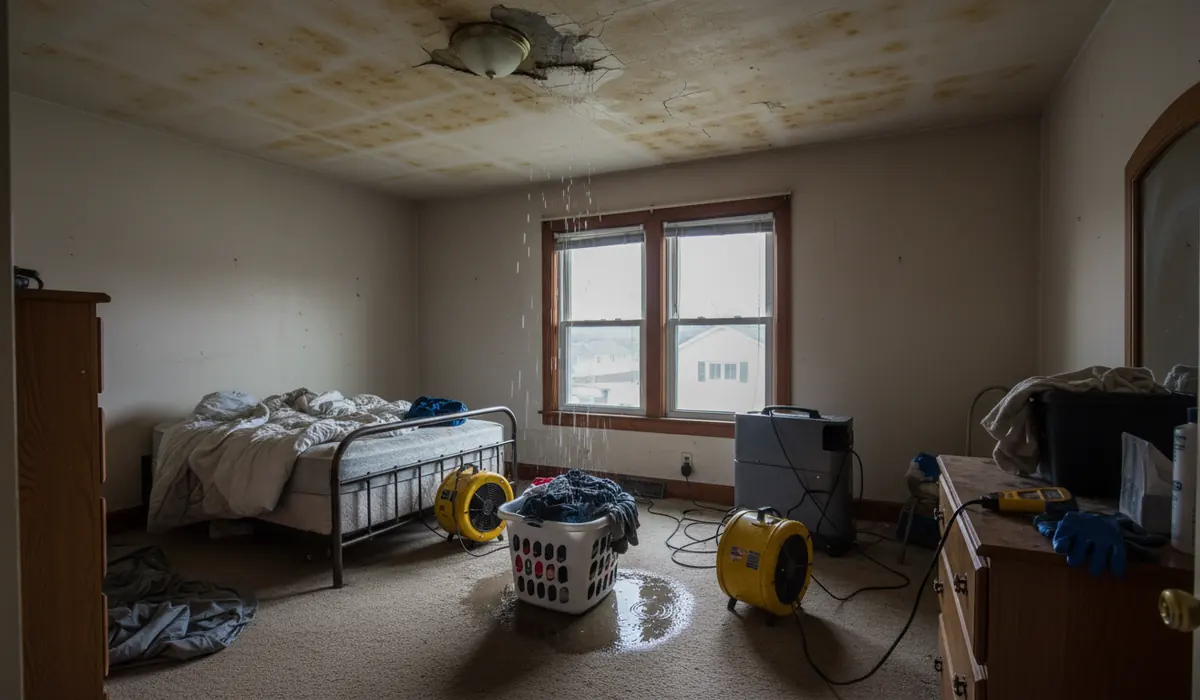
Water Damage Lansing is a water damage restoration company serving Lansing and East Lansing, where about half of homes are rentals and most housing near MSU is rented by the bedroom. So the first question on many of our jobs is who pays for water damage, the landlord or the tenant, in Michigan. This is general information, not legal advice. Your lease and the facts matter.
The basic split
| What’s damaged | Usually covered by |
|---|---|
| The building: walls, floors, ceilings, built-in appliances, fixtures | Landlord’s property insurance |
| Tenant’s belongings: furniture, clothes, electronics | Tenant’s renters insurance |
| Tenant’s temporary housing if the unit is unlivable | Tenant’s renters policy (“loss of use”), if included |
| Landlord’s lost rent | Landlord’s policy (loss of rents coverage), if included |
A tenant without renters insurance generally has no coverage for their own belongings, even when the building’s owner is fully insured.
When a tenant can be responsible
If a tenant caused the damage, for example by leaving a bath running, disconnecting a washer hose, or ignoring a leak they were asked to report, the landlord or their insurer may seek repayment from the tenant. Renters insurance usually includes personal liability coverage that can respond. Leases often require tenants to report leaks promptly and to keep the heat on in winter.
When the landlord can be responsible
Landlords are expected to maintain plumbing, the roof, and building systems. If the damage came from something the landlord knew about and didn’t fix, the tenant’s insurer may seek recovery from the landlord.
Exclusions that hit both
Both landlord and renters policies usually exclude:
- Sewer and drain backups, unless a water backup endorsement was added
- Flood (rising water), which needs separate flood insurance
- Gradual damage from long-term leaks
In Lansing’s older, combined-sewer neighborhoods, a basement-unit backup is a real risk that often falls into this gap. If the public sewer caused it, the property owner may file a written claim with the city within 45 days.
Multi-unit losses
In duplexes, converted houses, and apartment buildings, one failure often crosses units: an upstairs toilet line soaks the ceiling below, or a shared sewer line backs up into every basement unit. Each affected tenant files with their own renters insurer for belongings, and the owner files for the building. Clear, unit-by-unit documentation keeps everyone’s claim straight.
What to do right now
Tenants: notify the landlord in writing, photograph your belongings and the damage, and call your renters insurer. Landlords: stop the source, get water out quickly (mold can start within 24–48 hours), document each unit separately, and notify your insurer.
See rental property water damage for how we handle multi-unit cleanups.
The bottom line
If you want this priced for your own property rather than in ranges, we come out and assess at no charge across Lansing and the Greater Lansing area — including East Lansing, Okemos, Holt, DeWitt, Grand Ledge, Delta Township, and Haslett. You get a written scope with the water category and affected areas broken out separately. Call (517) 816-1499.